
From Survival to Sport: The Evolution of Freediving and Human Potential
How an ancient human practice evolved into a competitive sport that continues to challenge our understanding of the body's capacity to adapt.
Long before freediving became a sport, it was a way of life.
For thousands of years, coastal communities around the world have relied on their ability to hold their breath underwater to gather food, harvest natural resources and survive.
Today, competitive freedivers descend to depths that were once considered physiologically impossible. Yet the foundations of what we do are deeply rooted in humanity's ancient relationship with the ocean.
As a competitive freediver, I find this evolution particularly fascinating. The history of our sport is not simply a succession of records. It is a history of human adaptation, curiosity and the continual questioning of perceived limitations.
Before freediving became a sport
In Japan, the Ama continue a centuries-old tradition of diving to collect shellfish, seaweed and other marine resources. Predominantly women, they have passed their knowledge and techniques from generation to generation.
On the island of Jeju, South Korea, the Haenyeo represent another extraordinary tradition of female freedivers whose relationship with the sea is deeply embedded in their cultural identity.
Across Southeast Asia, the Bajau have developed a way of life intimately connected to the ocean. Generations of breath-hold diving have even left traces in their biology.
A study published in the scientific journal Cell in 2018 identified genetic adaptations associated with larger spleens among the Bajau, providing a greater reservoir of red blood cells that can be released into circulation during breath-holding.
Another fascinating example comes from the Moken communities of Southeast Asia, whose children have demonstrated an extraordinary ability to focus their vision underwater without goggles.
These communities offer different examples of how human capabilities can develop through cultural practices, repeated exposure to an environment and, over generations, biological adaptation.
They remind us that the relationship between the human body and water is far more complex than we might imagine.
The extraordinary story of Haggi Statti
In the Mediterranean, breath-hold diving has long been associated with sponge fishing, particularly around the Greek islands.
One traditional technique, known as Skandalopetra, involved descending with a stone attached to a rope. Once the underwater task was completed, a companion on the boat assisted the diver's return to the surface.
In 1913, a Greek sponge diver named Haggi Statti was called upon to recover the anchor of the Italian naval vessel Regina Margherita.
The anchor lay at a depth of more than 70 metres.
His extraordinary descent became one of the most celebrated early documented accounts of deep freediving.
What makes this story particularly remarkable is that, several decades later, medical professionals still questioned whether the human body could withstand such depths.
Experience had already demonstrated something that science was struggling to explain.
The birth of competitive freediving
During the 1950s, freediving began to emerge as a competitive sport.
In 1959, the Confédération Mondiale des Activités Subaquatiques (CMAS), or World Underwater Federation, was formally established in Monaco, with Jacques-Yves Cousteau as its first president.
The following decades saw an extraordinary period of exploration, driven by pioneers such as Enzo Maiorca, Jacques Mayol and Robert Croft.
At the time, scientists questioned whether descending beyond certain depths would cause catastrophic damage to the lungs and chest.
Yet athletes continued to challenge those assumptions.
In 1976, Jacques Mayol became the first freediver to reach 100 metres, a milestone that fundamentally changed perceptions of human underwater performance.
The rivalry between Mayol and the Italian freediver Enzo Maiorca later inspired Luc Besson's 1988 film The Big Blue, introducing generations of people to the mysterious world of deep freediving.
For many, the film was their first encounter with the idea that human beings could experience the underwater world in a completely different way.
Mayol also helped introduce a more contemplative dimension to freediving, incorporating elements of yoga, breathing practices and mental preparation into his approach to depth.
The sport was becoming not only an exploration of physical capacity, but also an exploration of the mind.
When performance challenges scientific understanding
One of the most fascinating physiological mechanisms associated with freediving is the phenomenon known as blood shift.
As a freediver descends and the surrounding pressure increases, the lungs are compressed. Blood is redistributed towards the thoracic region, helping the body accommodate changes in lung volume and pressure.
Understanding this mechanism helped explain how human beings could survive depths that earlier physiological models had suggested were impossible.
Freediving became an extraordinary field of observation for researchers interested in respiratory physiology, cardiovascular responses, hypoxia and human adaptation.
But the relationship between science and athletic performance has not always been straightforward.
Athletes have sometimes explored capabilities before the underlying physiological mechanisms were fully understood.
This does not mean that our bodies are without limits. Nor does it mean that every limit should be challenged.
The history of freediving contains remarkable achievements, but also serious injuries and tragic losses. Both deserve recognition.
Scientific curiosity, responsible progression and the development of safety protocols are essential companions to athletic ambition.
From No Limits to modern competitive freediving
For much of the twentieth century, the pursuit of extreme depths was associated with a discipline known as No Limits.
In this discipline, the freediver descends using a weighted sled and returns to the surface with the assistance of a flotation device.
Another discipline, Variable Weight, involves an assisted descent followed by an ascent using the freediver's own physical effort.
These disciplines enabled athletes to explore depths far beyond those achievable through swimming alone.
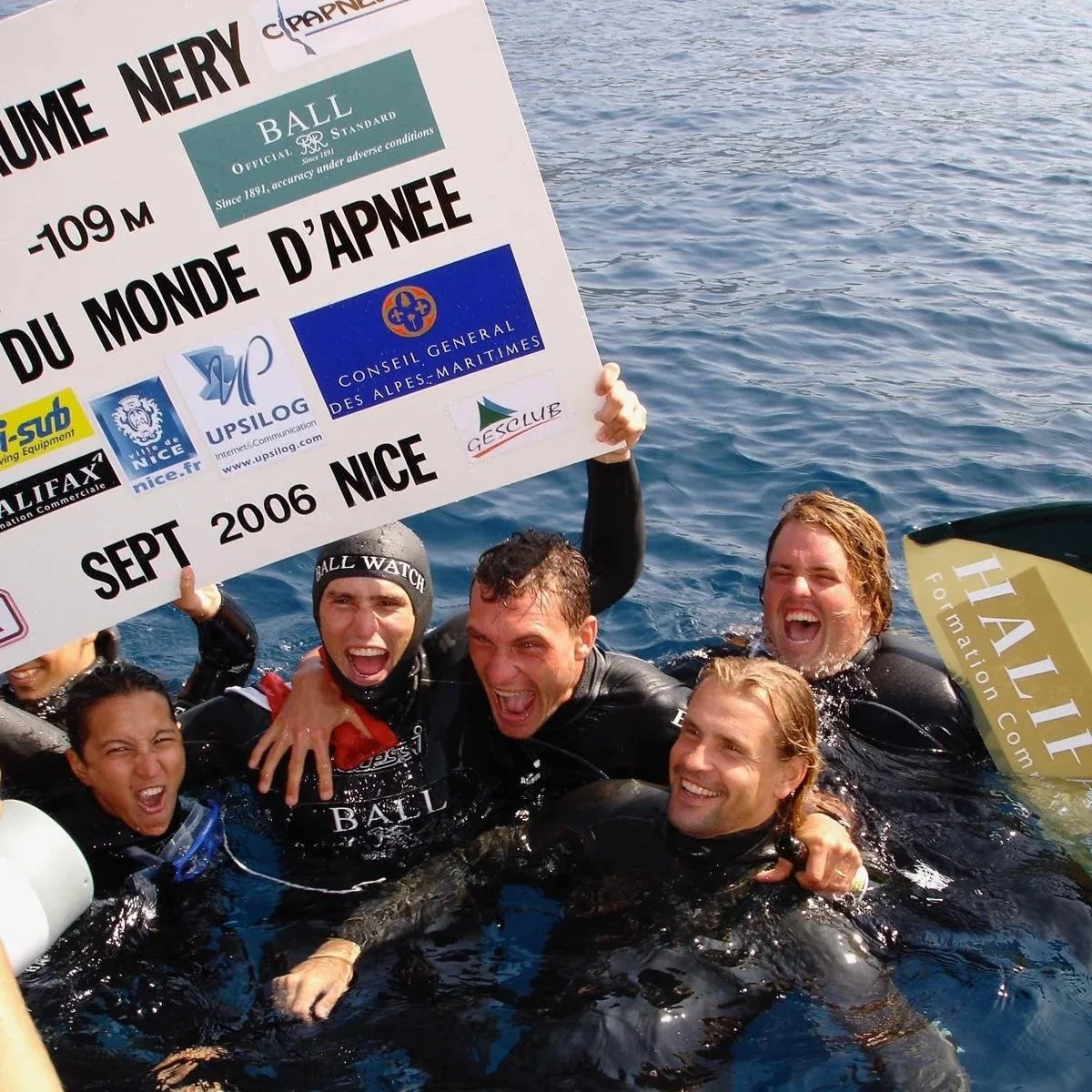
Among the remarkable pioneers of this period was Loïc Leferme, founder of CIPA, the historic freediving club in Nice where I would later begin my own journey into deep freediving.
In 2004, Loïc established a No Limits world record of 171 metres.
Tragically, he lost his life during training in 2007.
In 2012, Austrian freediver Herbert Nitsch reached approximately 253 metres in a No Limits dive recognised by Guinness World Records, but suffered severe decompression illness.
As the sport evolved, the focus of mainstream depth competitions increasingly shifted towards disciplines in which athletes descend and ascend under their own power.
AIDA International, established in 1992, played an important role in developing dedicated freediving regulations, competition structures and safety standards alongside CMAS.
Today, the emphasis of competitive depth freediving lies not simply in reaching a destination, but in the athlete's ability to complete the entire underwater journey.
The four main disciplines of competitive depth freediving
Modern international depth competitions revolve primarily around four disciplines.
Constant Weight with Monofin — CWT
The athlete descends and ascends using a single large fin, which creates a fluid, dolphin-like swimming movement.
The weight carried remains unchanged throughout the dive, and propulsion comes from the athlete's own movements.
Constant Weight with Bifins — CWTB
In this discipline, the athlete uses two separate fins.
It requires an efficient swimming technique, precise coordination and careful management of energy throughout the descent and ascent.
This is one of the disciplines in which I have established freshwater world records.
Constant Weight No Fins — CNF
Often considered one of the most technically and physically demanding disciplines, CNF requires the athlete to swim down and back to the surface without fins or propulsion from the rope.
Efficiency, coordination, relaxation and economy of movement become particularly important.
Free Immersion — FIM
The athlete descends and ascends by pulling along the diving rope without fins.
The rhythm of the movement and the direct physical connection with the rope create a very different experience of depth.
Each discipline presents a different relationship between movement, muscular effort, oxygen consumption, mental preparation and pressure.
Freediving as a laboratory for human adaptation
What fascinates me most about freediving is not necessarily the depth itself, but the transformation required to reach it.
Over years of training, I have experienced changes in the way my body responds to pressure, the way I perceive discomfort, the way I manage fear and the way I direct my attention.
Depth exposes the interaction between physiology and psychology with extraordinary clarity.
Physical strength alone is insufficient. So is mental determination.
Performance depends on the relationship between the two: technical knowledge, physiological adaptation, emotional regulation, recovery, attention and the ability to recognise when to stop.
Unlike many sports, where greater effort can produce greater performance, freediving often requires us to become more economical in our movements and more precise in the way we use our energy.
It teaches us that progress does not always come from doing more.
Sometimes, it comes from learning to do less, but with greater awareness.
What does it mean to explore human limits?
As an architect, I was trained to question assumptions, understand constraints and explore possibilities.
As a freediver, I discovered another field in which those same principles apply: the human body and mind.
The history of freediving demonstrates how our understanding of human capability can evolve through the interaction of experience, research, technology and imagination.
But it also reminds us of the responsibility that accompanies exploration.
The next frontier of human performance should not simply be about going deeper, faster or further.
It should also be about understanding ourselves better, developing more sustainable approaches to performance and recognising the difference between expanding our capabilities and disregarding our limitations.
These questions extend far beyond sport.
They are relevant to the way we work, learn, lead, adapt and respond to the pressures of everyday life.
Bringing the lessons of freediving into the workplace
Today, as an architect, world-record freediver, author and speaker, I bring the lessons of competitive freediving to companies, organisations and international audiences.
Through my keynotes and conferences, I explore:
Human adaptation and the perception of limitations
Sustainable performance under pressure
The relationship between mind and body
Curiosity, creativity and innovation
The balance between ambition, awareness and responsibility
Through my experiential workshop, 5 Minutes to Flow — How Breath Changes Everything, I introduce participants to accessible breathing techniques and explore how the breath can support stress regulation, concentration and emotional awareness.
Participants do not need any experience of freediving. The workshop translates insights from the underwater world into practical tools for everyday professional and personal life.
If you are organising a conference, leadership event, corporate retreat or team development programme, get in touch to discuss keynotes and experiential workshops for your organisation.
Discover Between Two Breaths
What does it feel like to descend into the ocean on a single breath?
What happens to our perception of ourselves when we begin to explore capabilities we never imagined possessing?
And what can the depths teach us about fear, trust, identity and the way we live?
I explore these questions in my memoir, Between Two Breaths — A Freediver's Memoir of Flow, Faith, and Finding the Self at Depth.
Through my personal journey from architecture to world-record freediving, the book explores the human experience behind the sporting achievements.
Discover Between Two Breaths and explore the world beneath the surface.
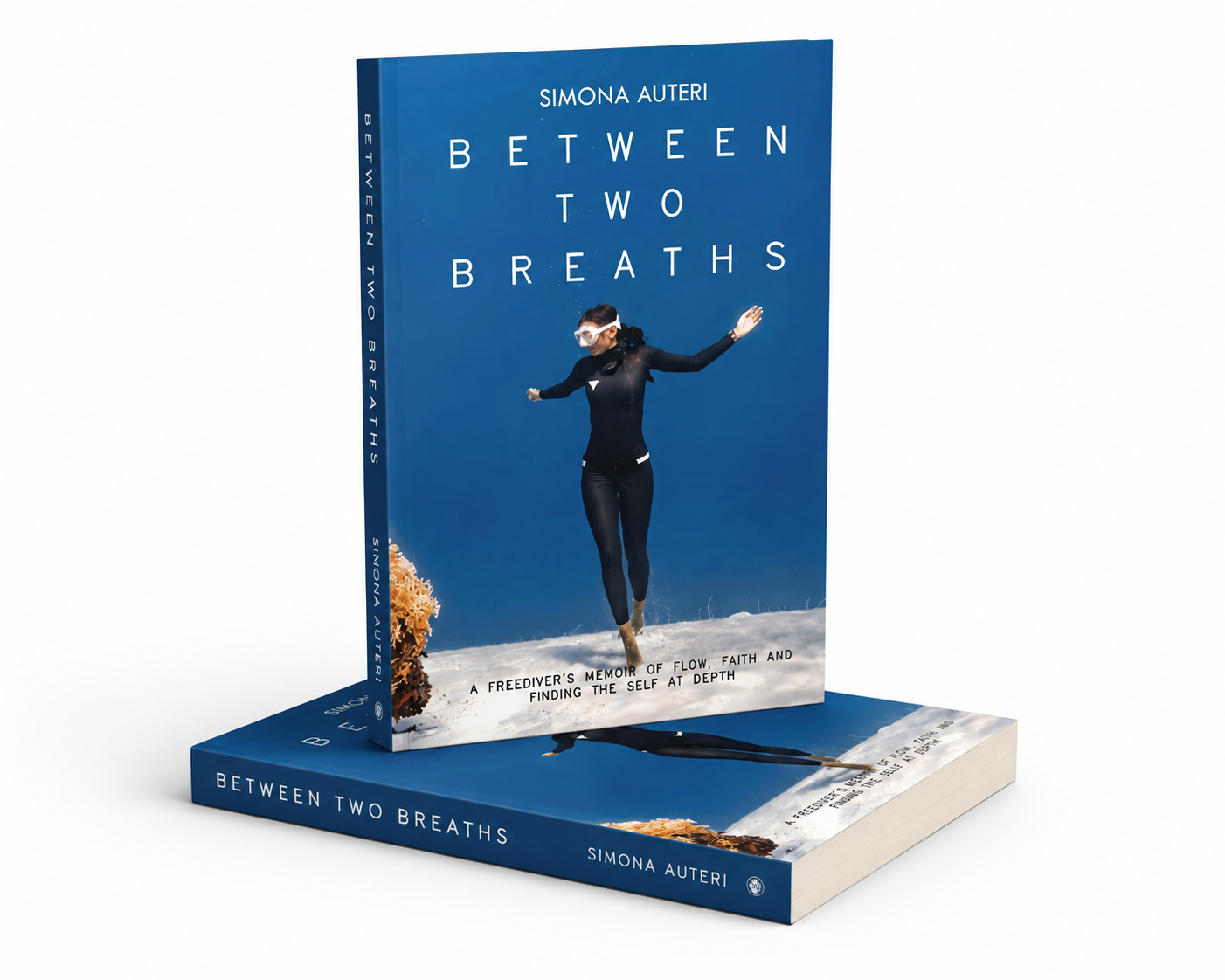
Order an author signed copy of Between Two Breaths!
Somewhere between effort and surrender, there is a place where breath becomes stillness.
Between Two Breaths tells the story of how a chance encounter with the underwater world transformed architect and entrepreneur Simona Auteri into a world-record freediver. Beneath the surface, where pressure rises and silence deepens, she learns how fear can become focus, and how letting go can reveal a new kind of strength.
Part personal journey and part love letter to water, the book explores the physical and mental demands of freediving, the power of breath, and the clarity found in surrendering to the unknown. In a world shaped by speed and noise, freediving becomes a practice of return - to presence, to trust and to what remains when everything unnecessary falls away.
Simona Auteri is a world-record freediver, multiple-time Italian champion, and recipient of several sporting merit awards from the Italian Olympic Committee (CONI). She coaches breathwork and mental performance techniques.
Further reading
Physiological and Genetic Adaptations to Diving in Sea Nomads — Cell, 2018
Superior Underwater Vision in the Moken Population — Current Biology, 2003
Skill Building in Freediving as an Example of Embodied Culture — 2024
Safety note: Freediving carries inherent risks and should never be practised alone. Deep freediving requires appropriate training, qualified supervision and dedicated safety procedures.